




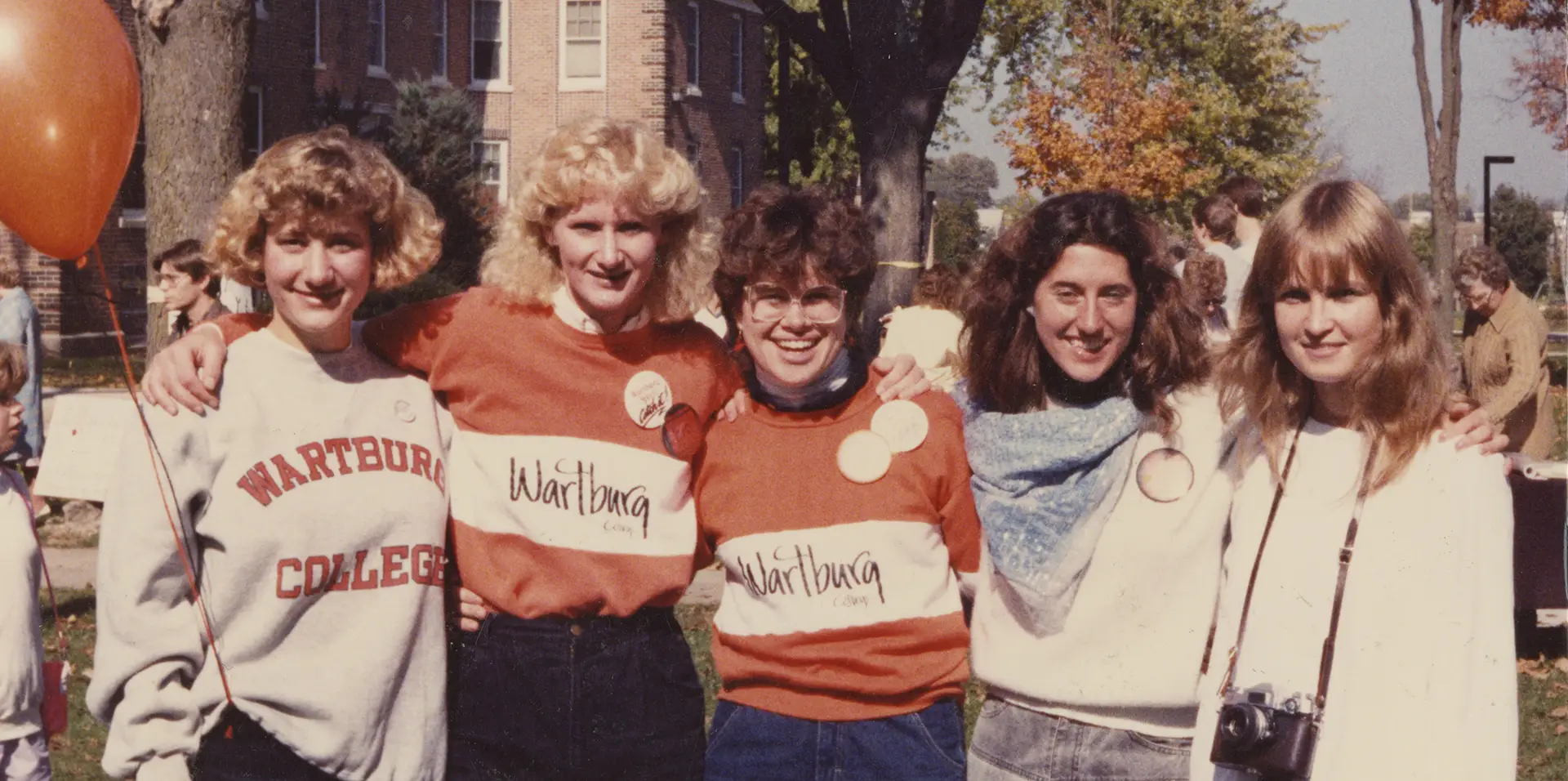
Wartburg History: Alumni Memories & Stories
The story of Wartburg College is best told through the lives of the people who have called it home. Across generations, Wartburg alumni have carried with them memories of friendships formed, lessons learned, traditions celebrated, and experiences that shaped their personal and professional journeys. From classrooms and residence halls to athletic fields, performance stages, and service opportunities, these shared experiences have created a lasting connection to the college and to one another.
The memories and stories collected here offer a glimpse into the enduring impact of a Wartburg education. They reflect moments of discovery, challenge, laughter, faith, and community that continue to resonate long after graduation. Together, these reflections preserve the rich legacy of Wartburg while celebrating the individuals whose experiences have helped define the college’s history and inspire future generations of Knights.
Early Wartburg Memories
These quotes from were published in Dr. Ron Matthias’s Still on the Move history book
and were retrieved through various other published sources.
Waverly (1890s)
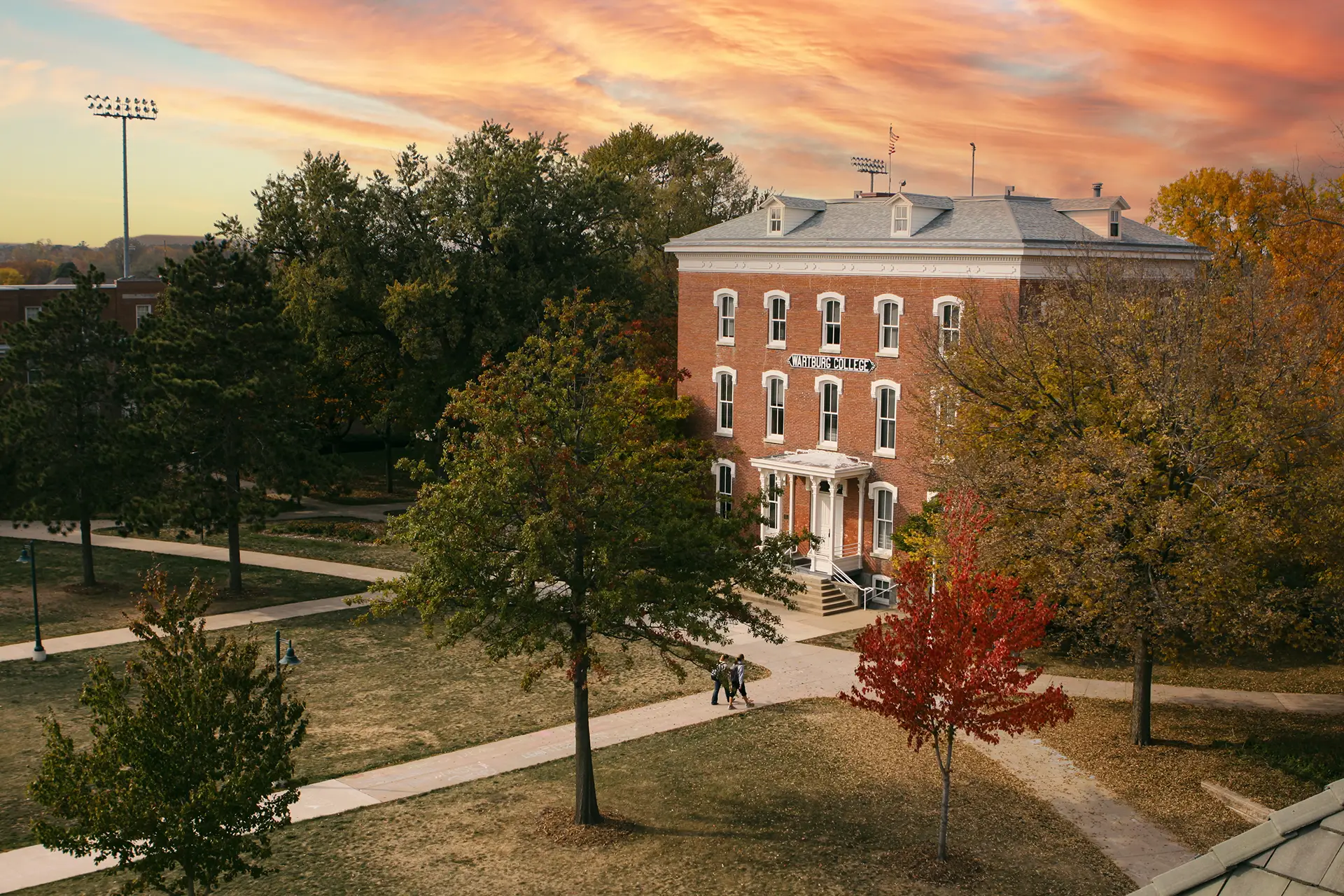
“We had no privacy. Our whole freshman class studied, lived, rested, played, and existed in the room on the southwest corner of the first floor of Old Main. Oil lamps were used for lights, in pairs in four chandeliers, and we had to clean and fill them ourselves. A round oak stove to the corner was heated with maple wood in the fall and hard coal in the winter, and we had to saw and split the wood and carry the coal and ashes in and out.”
Clinton (1920s)
“It was plain that in the absence of women the table manners of young men all but vanished.”
Waverly (1935)
“Wartburg is free from the rivalry, the narrowness, and the extravagance usually connected with the fraternity and sorority system. At Wartburg all students live together in one friendly democratic relationship which welds them together into one loyal unit. They learn to rub shoulders with others, to understand, to appreciate various viewpoints, learn the art of living together, cooperating together, playing together. There they acquire the proper social graces; here they also learn the first principles of self-government, of self-reliance, and of personal responsibility, altogether a wonderful educational experience in living.”
Clinton (1899)
“Several other German students and I have a special friendship, and we try to hold our own with the American students. There is constant friction. The students like to put down the Germans, but my German heritage doesn’t stand for that. I am happy here, there are many opportunities, but it is not a land of milk and honey.”
Clinton (1920s)
“A dramatic group on campus produced at least one play annually in the downtown Clinton Theatre. In the absence of coeds, males were cast in women’s roles, with predictably hilarious outcomes.”
Waverly (1915)
“Although girls and boys met in classes daily, we were forbidden to fraternize in any way beyond the structured meetings of the approved school organizations. Dating a girl wa a risky business, accomplished usually by Sunday afternoon walks along the railroad tracks.”
Clinton (1920s)
“The pattern of social and extracurricular life at the two institutions [Waverly and Clinton] differed markedly. At Clinton there was much less talk about girls and dating, while the extracurricular attention centered on athletics-chiefly baseball and basketball-the orchestra, and the literary societies.”
Waverly (1918)
“We had what seems in retrospect a plethora of activities, orchestra, band, glee clubs, mixed chorus, a debating team (briefly), declamatory contests, a Lutheran Brotherhood club, a student montly newspaper, a year book, a dramatic society, literary societies (everyone was expected to choose one of the three such) and, of course the class organizations. Only in athletics and physical education were we short changed.”
Clinton (1920s)
“On weekends we made forays into the countryside, sometimes pilfering grapes, apples, peaches, watermelons, or strawberries in season; or we rented canoes and explored the shoreline and some of the islands of the Mississippi River. Most of us went to Clinton by trolley Sunday mornings to attend services at Zion Lutheran, and that led occasionally to an invitation to dinner and an introduction to a daughter and some of her friends.”
Waverly (1931)
“Resolved… that brief Chapel talks, based on a word of scripture (no long-winded exhortations) not to exceed 5-8 minutes in length, be given by the teachers appointed by the director.”
Knights Love Stories
These stories were gathered and used with permission from alumni through
the Oral History Project conducted by Publishing Concepts LP in 2023.
Stories coming soon.
Recent Alumni News & Features
-
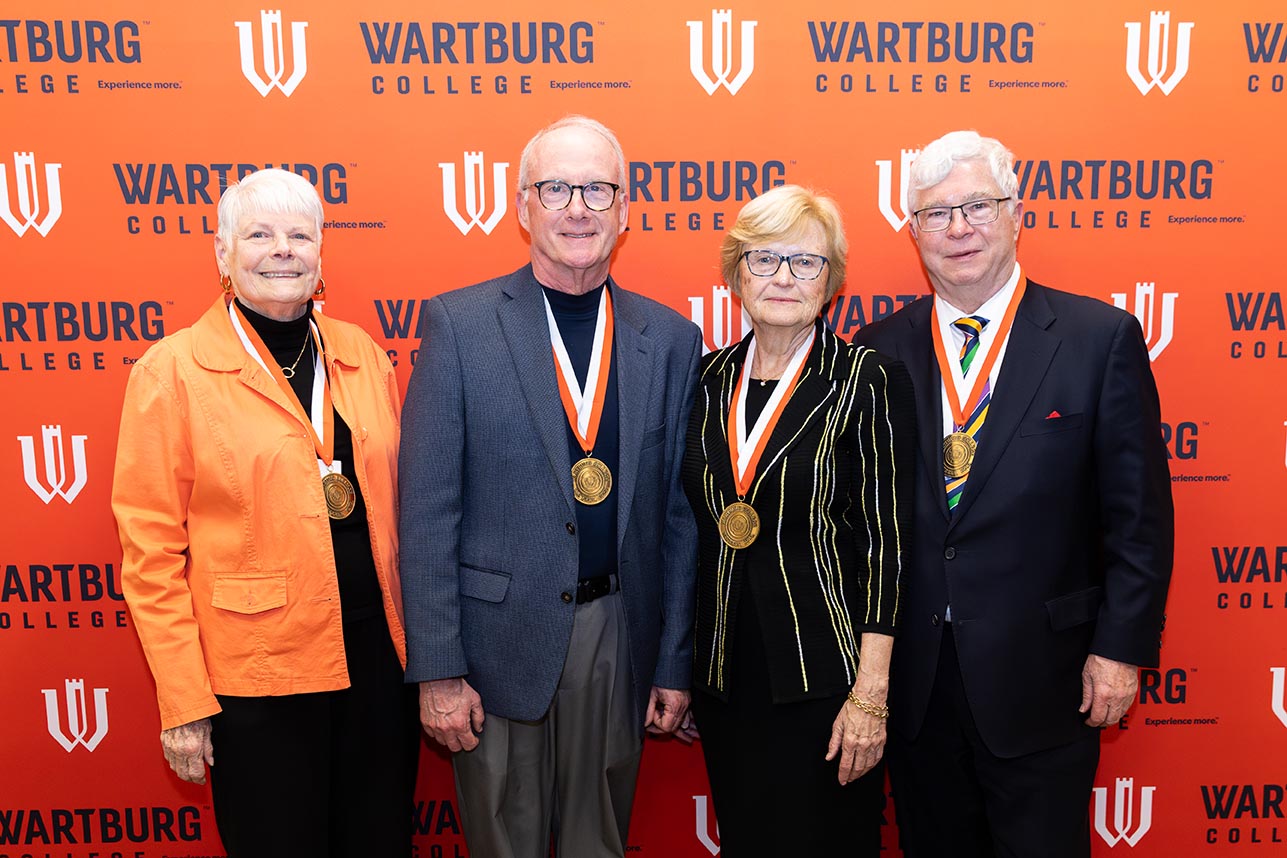
Wartburg Medals presented during college’s first Pillars of Impact celebration
Wartburg College has recognized four individuals with its highest honor, the Wartburg Medal, celebrating their exceptional service, leadership and commitment to the college’s mission.…
-
Three Wartburg College graduates to receive Young Alumni Awards
Wartburg College will recognize three outstanding young alumni for service to their communities with a Young Alumni Award. The award honors graduates from the…
-
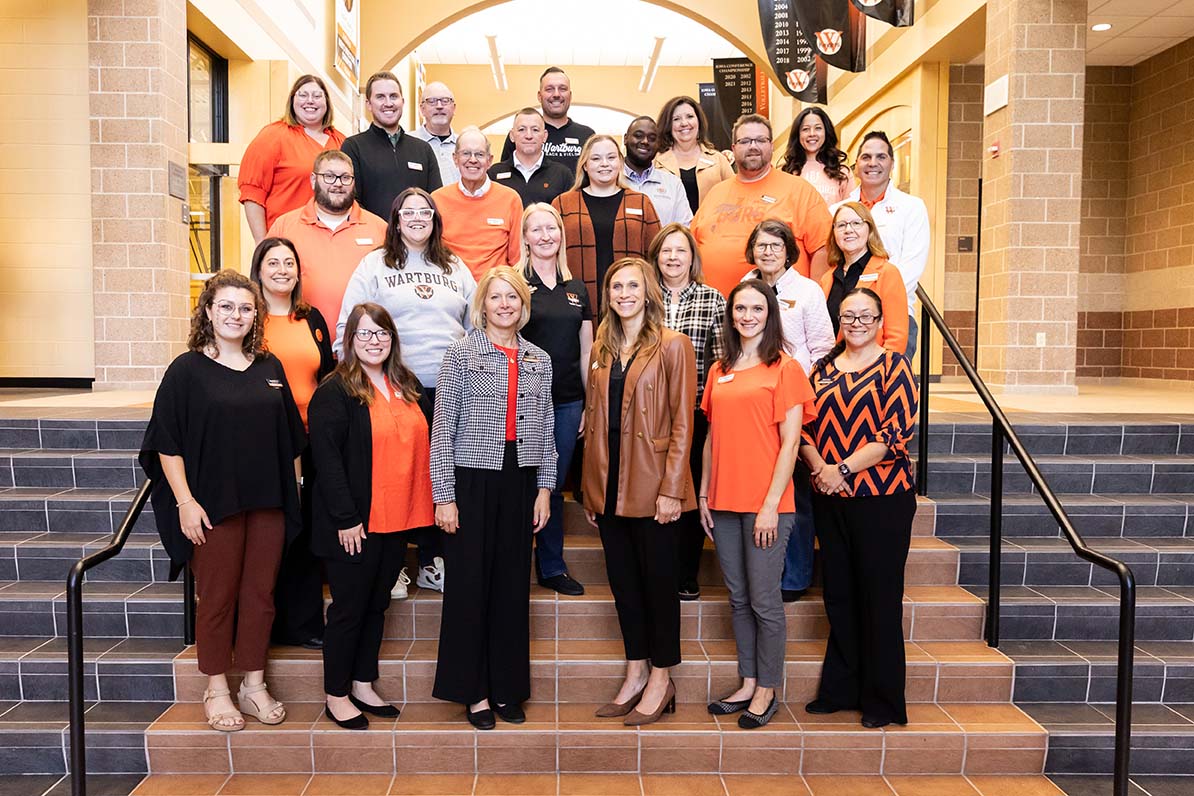
Wartburg College Alumni Board announces new members
The Wartburg College Alumni Board has added new members for the 2025-26 academic year. The group is made up of volunteers who serve two-year…
FAQ
Waverly Student (1890s)
“We had no privacy. Our whole freshman class studied, lived, rested, played, and existed in the room on the southwest corner of the first floor of Old Main. Oil lamps were used for lights, in pairs in four chandeliers, and we had to clean and fill them ourselves. A round oak stove to the corner was heated with maple wood in the fall and hard coal in the winter, and we had to saw and split the wood and carry the coal and ashes in and out.”
Clinton Student (1920s)
“It was plain that in the absence of women the table manners of young men all but vanished.”