



WARTBURG MAGAZINE | SPRING 2026 DIGITAL ISSUE
Ready for the worst
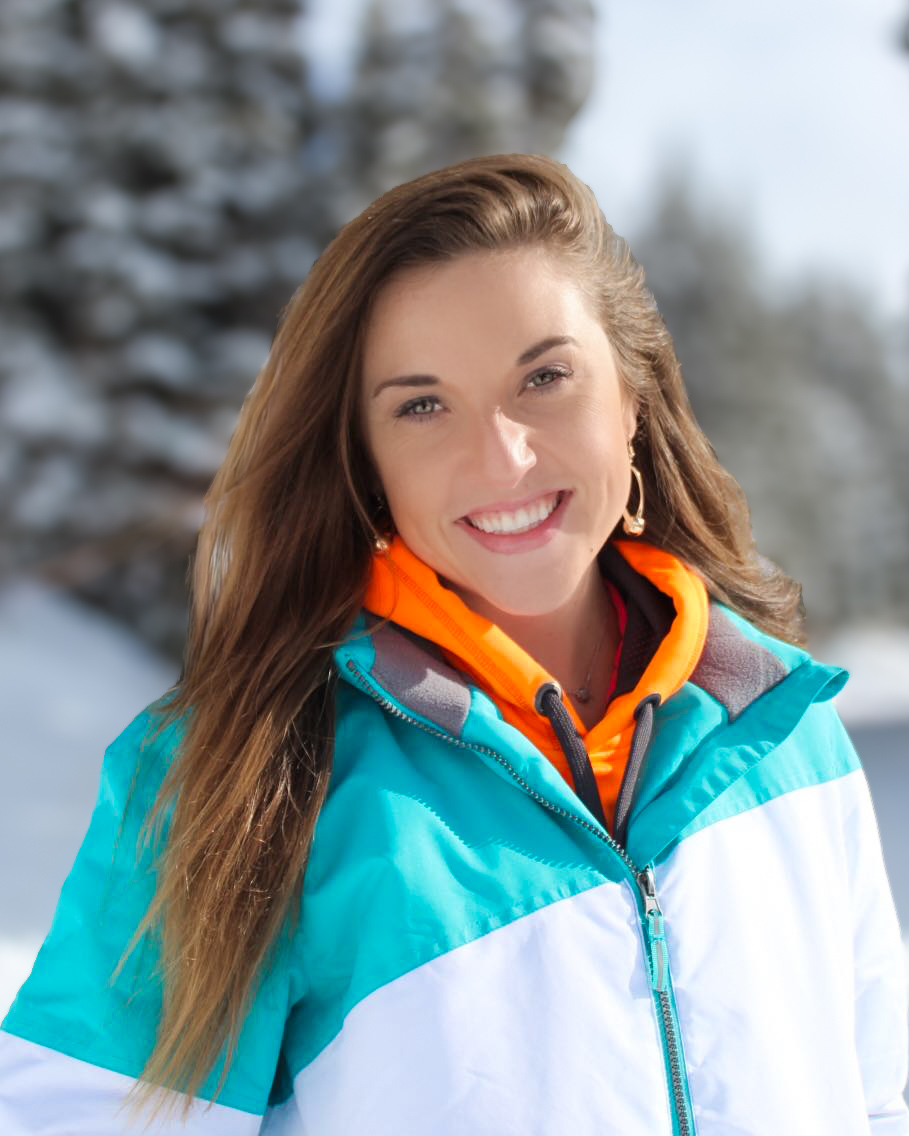
Physician and adventurer Natalie Bonthius ’17 is empowering people worldwide with wilderness medicine and survival training
March 10, 2026
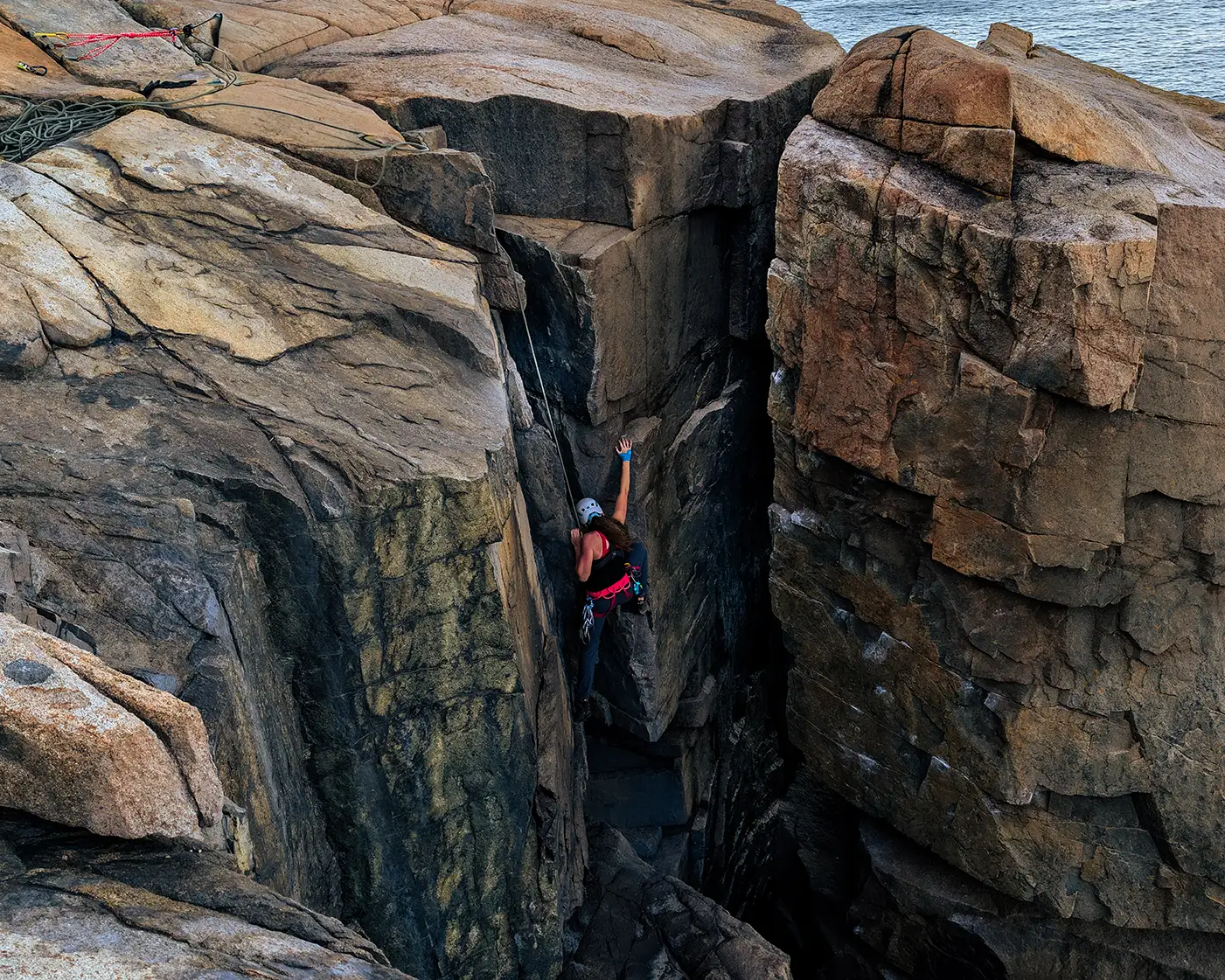
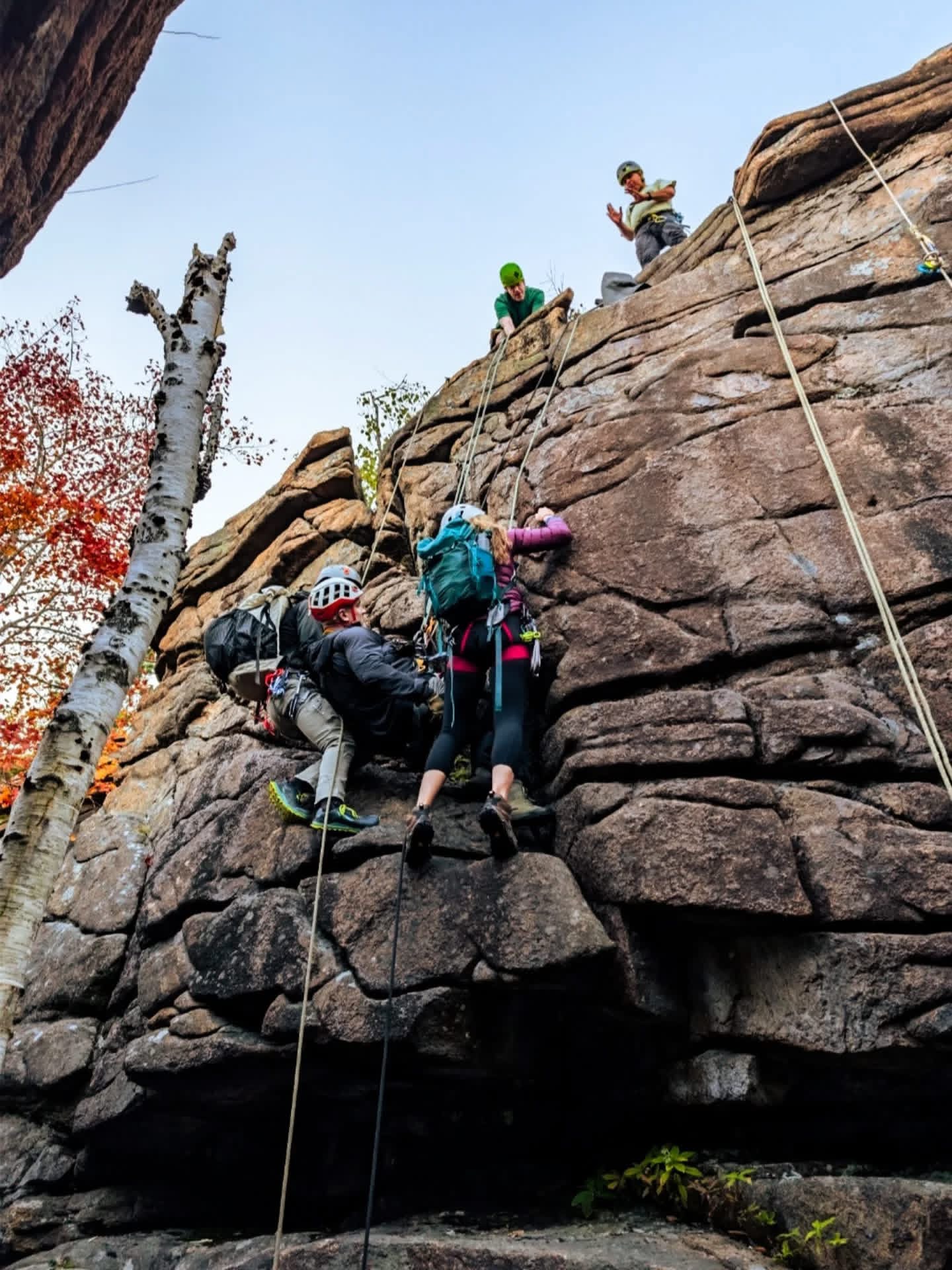
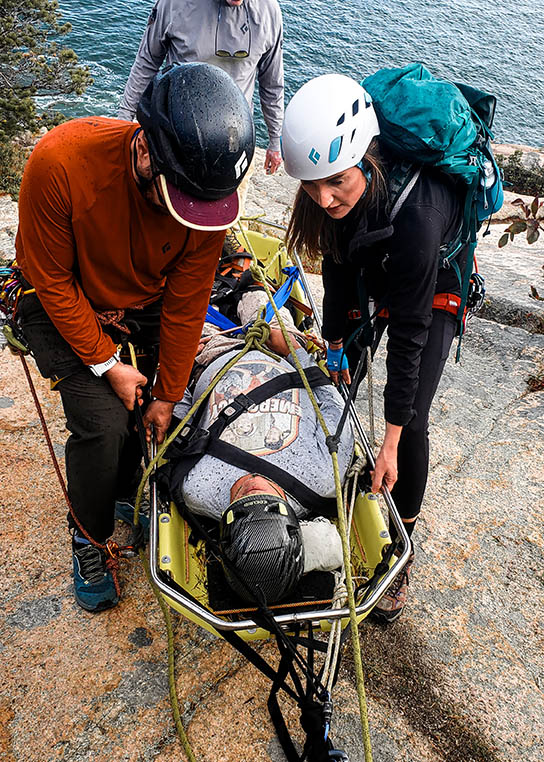
A bystander applies a tourniquet on a crash victim’s leg, stopping the bleed that doctors later say would have killed him before help arrived. A college student suffers a compound fracture during a remote climbing trip and must be stabilized and carried to safety. A family lost overnight in the woods with no food or protection from the elements must find a way to survive until they can find their way out.
For most, these are once-in-a-lifetime emergencies. For Natalie Bonthius ’17, it’s just another day in the office at Survival Med, the platform she founded in 2021 to train individuals on everything from basic first aid using available items to how to survive in the most extreme conditions.
“You learn very quickly how even small medical issues can turn into huge disasters,” said Bonthius. “People really underestimate how much they rely on what can actually be a very fragile system. What happens when the system you are counting on is no longer there because of a power outage or a storm or any number of other reasons? Suddenly, even if you are in a regular environment, it becomes a survival situation. Just a little bit of training can really help in those situations.”
Bonthius was in her third year of medical school at the University of Central Florida when the world shut down for the COVID-19 pandemic. She was unable to complete the traditional hospital rotations needed to finish her doctorate and instead had to find other opportunities that would get her the experiences she needed.
For Bonthius, who fell in love with extreme adventuring as a child and nurtured that passion while studying in Austria her final year at Wartburg, the opportunity to combine her excitement for medicine and adventuring was one she couldn’t pass up. Orlando may have been great for medical school, but outdoor adventure opportunities were limited. So she headed to Salt Lake City, where she designed her fourth year of medical school to work with the Salt Lake County Search and Rescue team and teach wilderness medicine at the University of Utah.
“The typical activities people were used to doing weren’t available to them, so they headed outside,” Bonthius said. “While there are a lot of positive effects of that, one of the big negatives was that it increased search and rescue calls threefold in our area. In one day in the Grand Canyon, they could have up to 80 calls come in, which exceeded the capacity of the rescue teams.”
Rescue training options were expensive and inflexible, not to mention unavailable during the early days of the pandemic. Bonthius knew there had to be a better — and more cost-effective — way to train people, so she built it.
She hoped the trainings would find success locally, but the broader need for this service quickly became apparent. More than 600 people registered for her first online class, and to date Survival Med has trained more than 35,000 individuals living on all seven continents. Her clients have included families planning wilderness vacations, employees of the National Park Service and U.S. Forest Service, NASA, the CIA, researchers in Antarctica, and movie crews filming in remote locations.
“I remember getting home from an 18-hour shift at the hospital and then answering emails so I could keep up with the requests,” she said. “It ended up being so much more wide-reaching that I decided to take a full year off between medical school and my residency to develop the company.”
Today, Survival Med has a full-time team of employees that includes about 300 physicians and health care instructors around the world. This allows Bonthius to balance her work with Survival Med with a teaching position at Dartmouth’s Geisel School of Medicine, shifts in Dartmouth Health emergency rooms, and volunteering with the Upper Valley Wilderness Response Team. She’s also serves as the medical director for a developing survival television series. And she still finds time to head out on her own adventures.
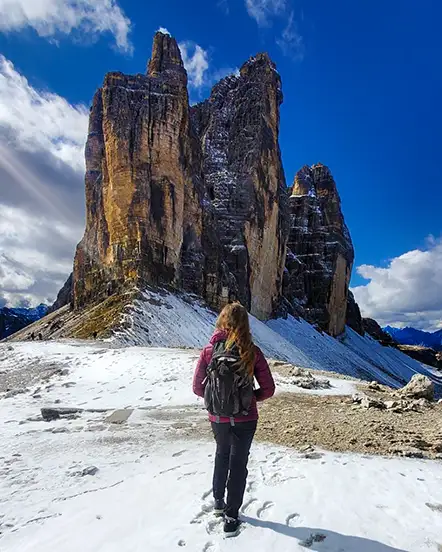
“I think I’ve been to 70 countries. I’ve always loved going out exploring, but the top would probably be Iceland or New Zealand,” she said. “I spent a month in each during my residency training and learning about their rescue infrastructure. Both places were just so otherworldly.”
Top 5 Reasons People Call Search & Rescue
Starting a hike too late without a headlamp and unable to descend safely after dark.
Leaving the main trail for a “quick shortcut” or viewpoint, then becoming cliffed-out or unable to find the trail again.
Injury during the descent after successfully reaching the objective, most commonly ankle fractures or knee injuries from fatigue and loose terrain.
Becoming immobilized by sudden weather or cold exposure, where the person knows their location but cannot continue moving safely.
Psychological paralysis on unexpected exposure or technical terrain, where the person is physically uninjured but too frightened to proceed.
-
Ready for the worst
WARTBURG MAGAZINE | SPRING 2026 DIGITAL ISSUE Ready for the worst Physician and adventurer Natalie Bonthius ’17 is empowering people worldwide with wilderness medicine…
-
Cracking cancer’s code
WARTBURG MAGAZINE | SPRING 2026 DIGITAL ISSUE Cracking cancer’s code A Wartburg faculty-student team publishes new discoveries about ovarian cancer metastasis offering insight that…
-
The stories that teach
WARTBURG MAGAZINE | SPRING 2026 DIGITAL ISSUE The stories that teach Social work students turn interviews with local volunteers into powerful lessons about listening,…