



WARTBURG MAGAZINE | SPRING 2026 DIGITAL ISSUE
Cracking cancer’s code
A Wartburg faculty-student team publishes new discoveries about ovarian cancer metastasis offering insight that could inform future treatments
March 12, 2026
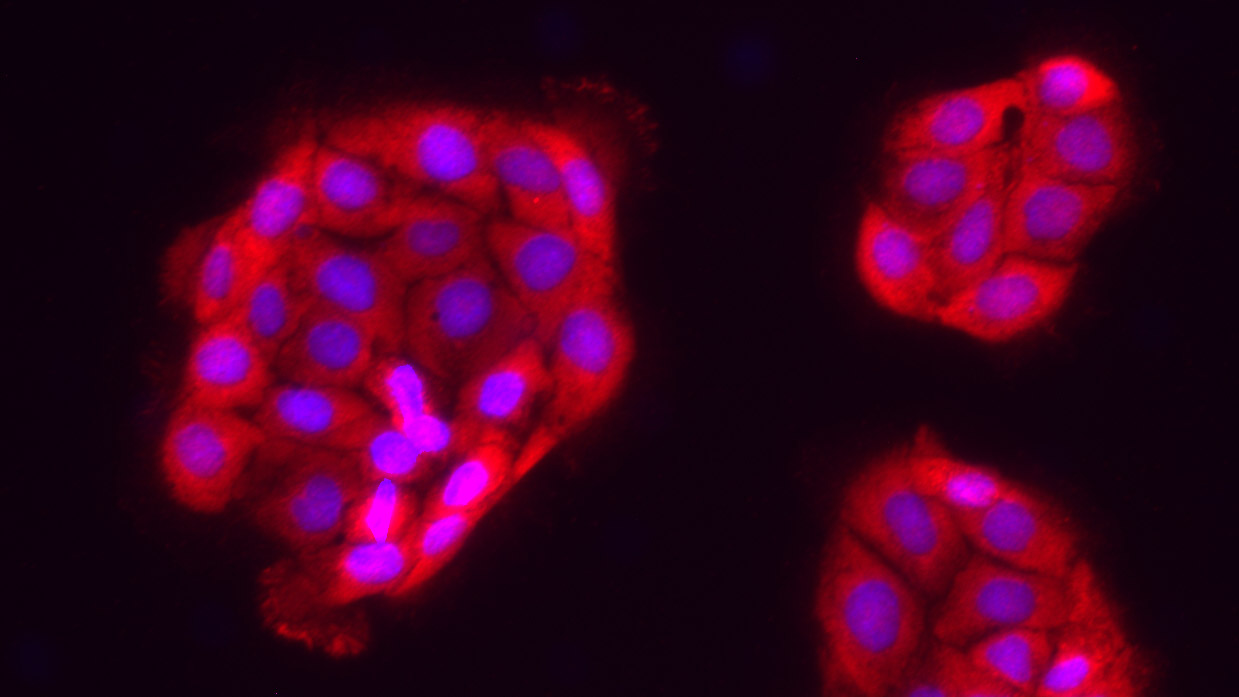
Newly published research by a Wartburg College professor and his students is helping scientists better understand how ovarian cancer spreads, offering insight into one of the leading causes of cancer deaths among women.
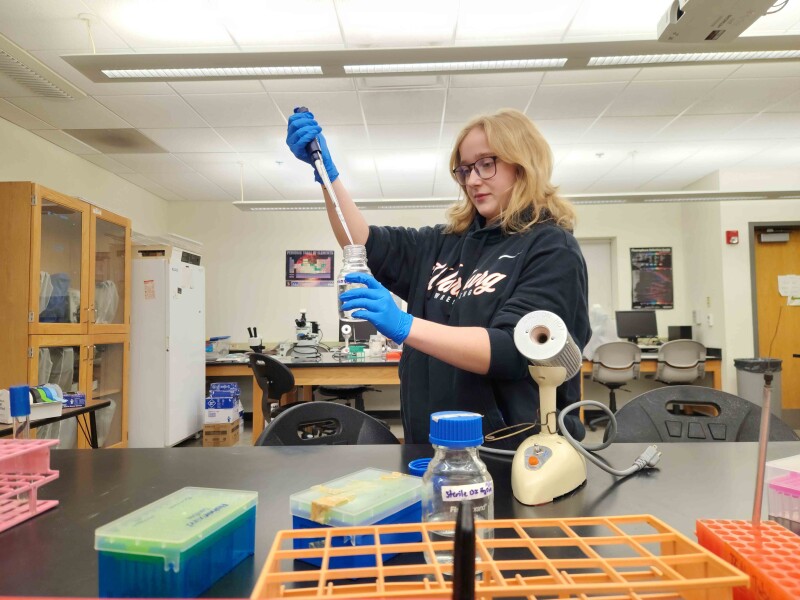
Dr. Shawn Ellerbroek, Wartburg’s Ralph E. Otto Endowed Professor in Chemistry, worked with eight students over the course of five years on the research, which culminated with the publication of “Matrix metalloproteinase-9 regulates cell adhesion and membrane protrusive activity of ovarian cancer cells” in FEBS Open Bio, a peer-reviewed journal.
The researchers used gene-editing technology called CRISPR to show how the loss of a specific enzyme reduced the ability of the ovarian cancer cells to adhere to proteins that are targeted during metastasis.
“We are always interested in what controls how cells adhere to new environments because that is fundamental to their spreading,” Ellerbroek said. “So, we have identified a primary regulator for how well ovarian cancer cells stick to the mesothelial lining of the peritoneal cavity (abdomen) during metastasis.”
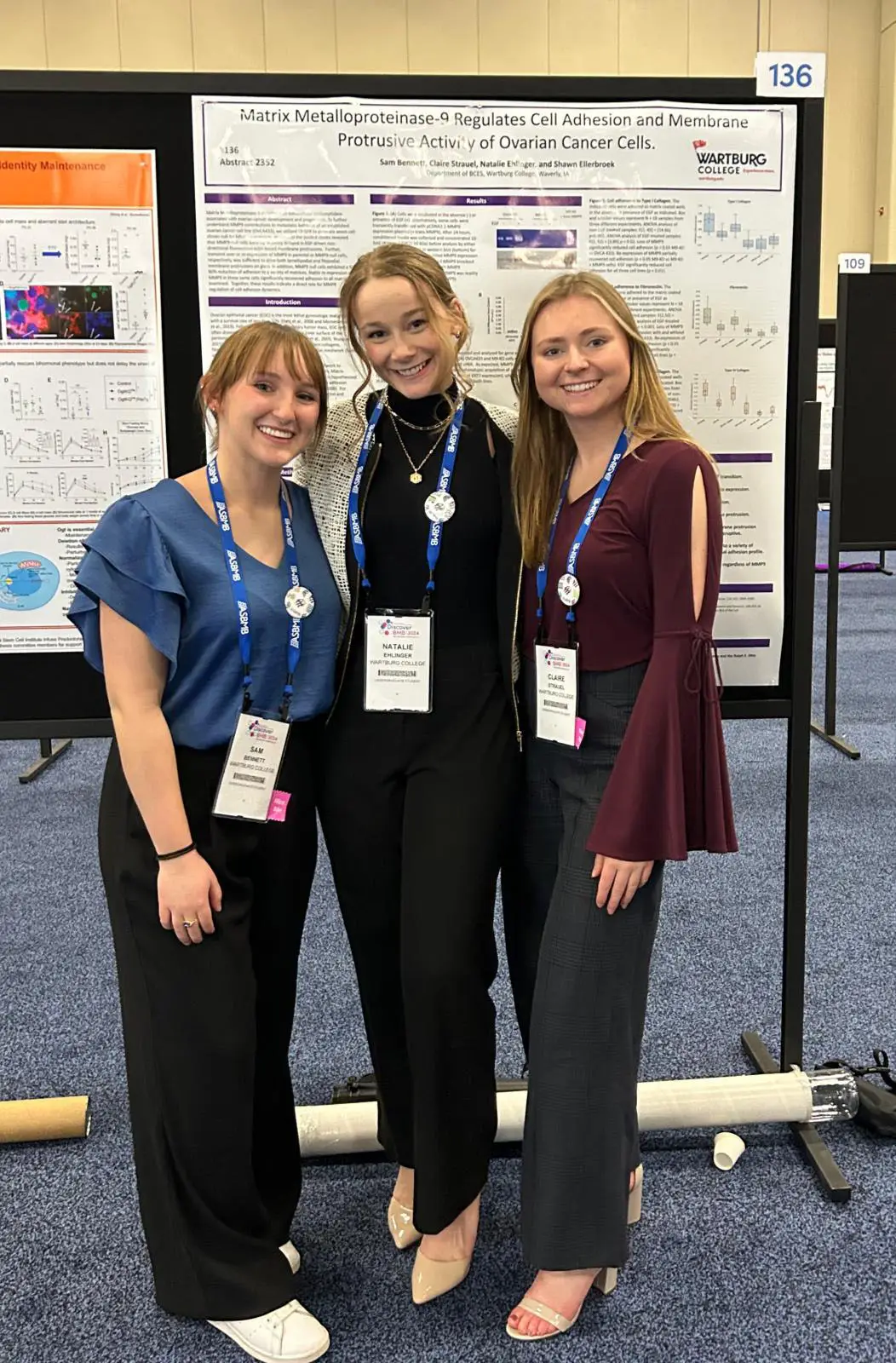
The students who aided Ellerbroek in this research were Brooke Kirby ’21, Nelson Cook ’22, Katelyn Finnegan Marvin ’22, Caleb Lines ’22, Sam Reyes ’22, Claire Strauel ’24, Sam Bennett ’24, and Natalie Ehlinger ’25.
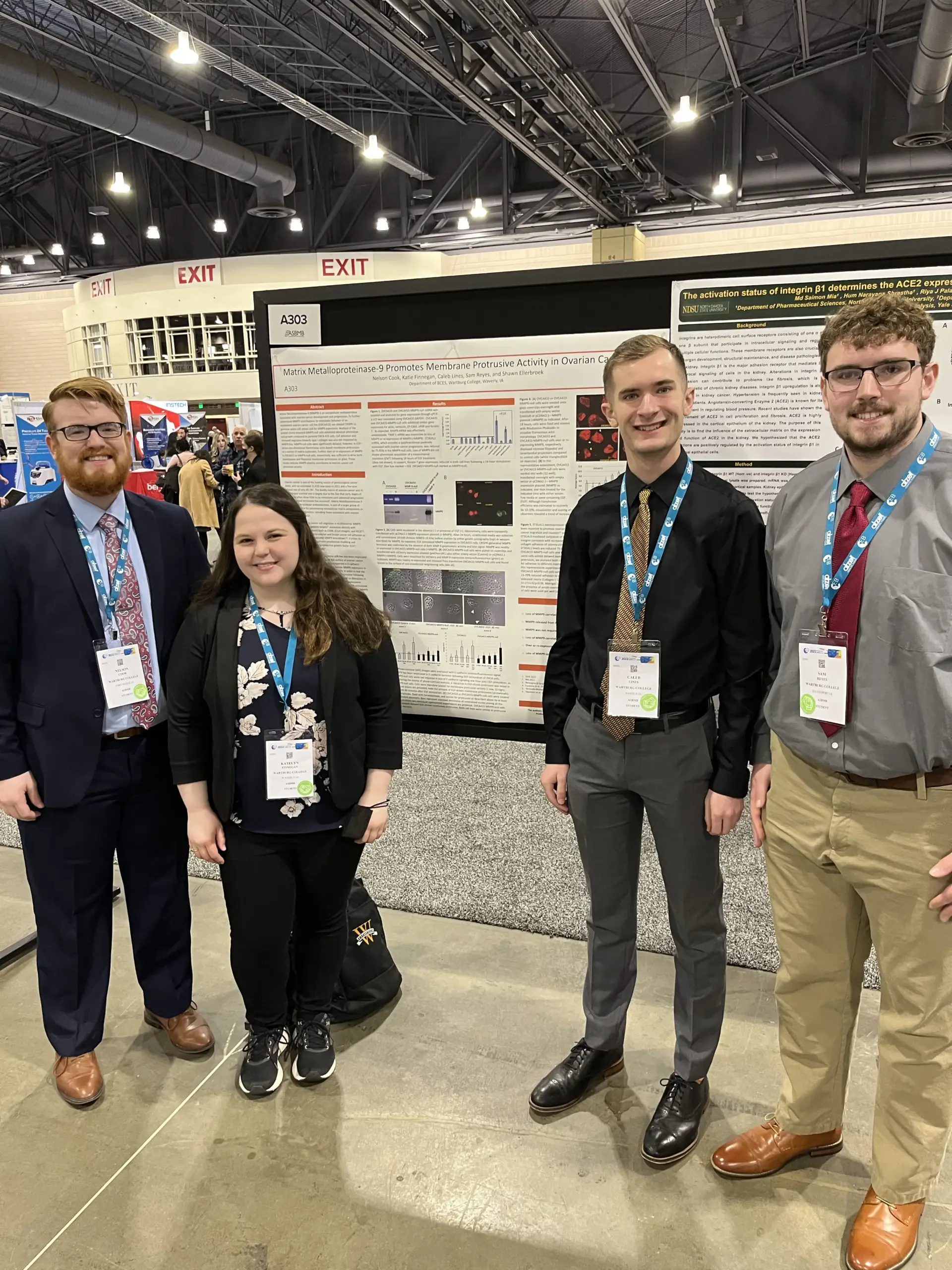
In 2022, Cook, Marvin, Lines and Reyes presented “Matrix Metalloproteinase-9 Promotes Membrane Protrusive Activity in Ovarian Cancer Cells,” which was based on the same research, at the American Society for Biochemistry and Molecular Biology annual meeting in Philadelphia. Bennett, Strauel and Ehlinger presented “Matrix Metalloproteinase-9 Regulates Ovarian Cancer Cell Adhesion” at the 2024 ASBMB meeting in San Antonio.
“These experiences conducting and presenting research were transformative for the students involved,” Ellerbroek said. “Not only does it shine on a resume or give them something to talk about during an interview, but they were also able to network with others in the science and research community. As they sit in the room with someone who won a Nobel Prize, they can see themselves in that world.”
For Ellerbroek, who has studied ovarian cancer since 1996, his goal with the work remains the same.
“With the cancer rates we are currently experiencing in Iowa, it’s important that we keep working hard to gain more information that will help with early detection, therapy development and eradication of the disease,” Ellerbroek said. “The enzyme we knocked out is associated with many other cancers, which opens the possibility that this is applicable to other solid cancers, like breast cancer.”
The research project received financial support from the Otto Professorship, Wartburg Undergraduate Research Program, and the college’s Research Equipment Endowment. Thanks to the generosity of donors, the college has about $350,000 in endowment funds earmarked for student-faculty research. The largest of these is the Brosz Undergraduate Research Endowment, which supports student-faculty research experiences in the sciences. The fund was established by the late Marvin ’52 and Charlene Brosz in celebration of Marvin’s love of science, hands-on learning, and his appreciation for the faculty that helped shape his education at Wartburg.
“Without those generous financial contributions, this would not have happened,” Ellerbroek said.
-
Ready for the worst
WARTBURG MAGAZINE | SPRING 2026 DIGITAL ISSUE Ready for the worst Physician and adventurer Natalie Bonthius ’17 is empowering people worldwide with wilderness medicine…
-
Cracking cancer’s code
WARTBURG MAGAZINE | SPRING 2026 DIGITAL ISSUE Cracking cancer’s code A Wartburg faculty-student team publishes new discoveries about ovarian cancer metastasis offering insight that…
-
The stories that teach
WARTBURG MAGAZINE | SPRING 2026 DIGITAL ISSUE The stories that teach Social work students turn interviews with local volunteers into powerful lessons about listening,…